
A decade after David
Rest in stardust: A new doc and an old appreciation
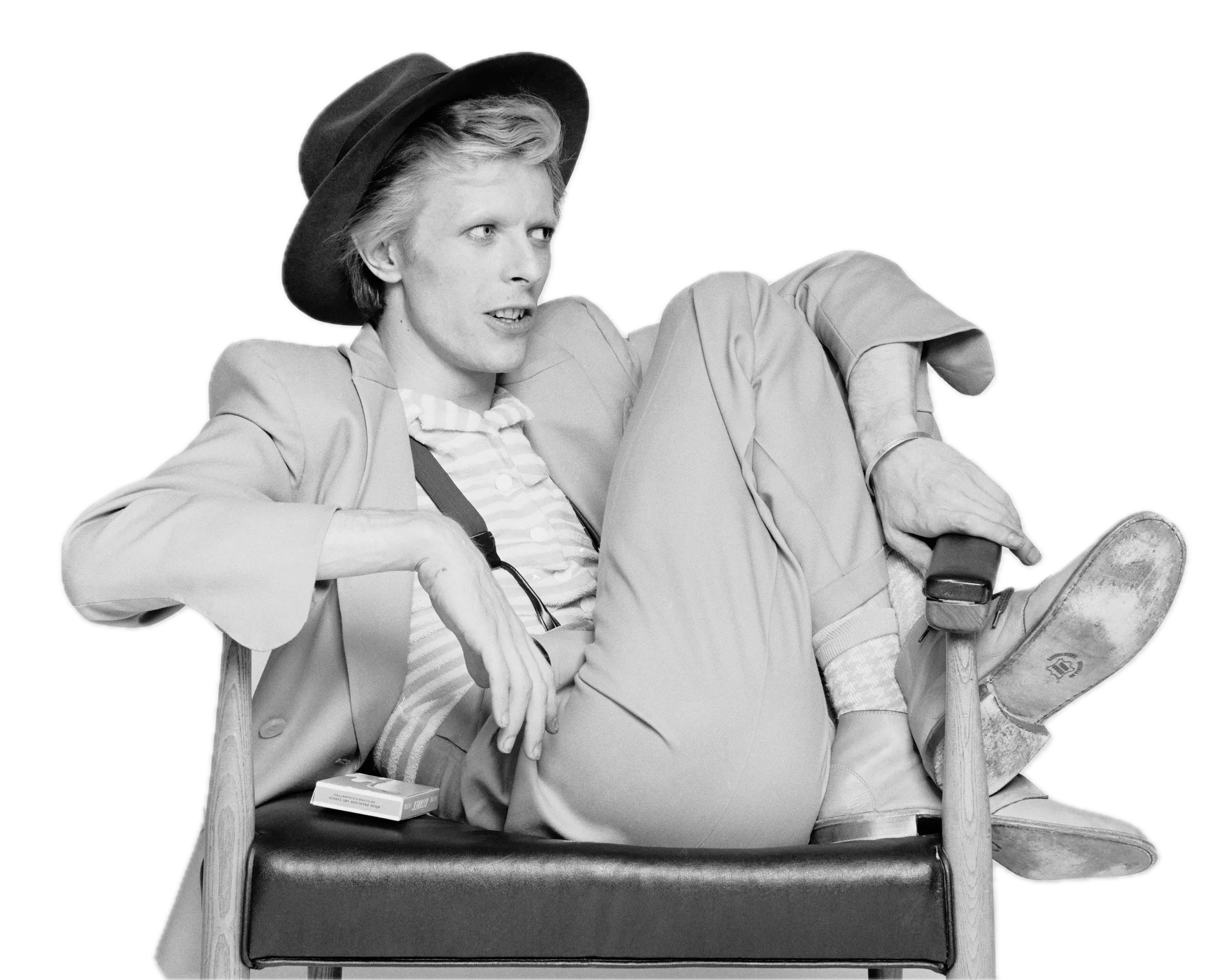
Unbelievably, it’s been 10 years since David Bowie died on January 10, 2016. Five years (“my brain hurts a lot”) plus five years more (“that’s all we’ve got”). Then came Prince in April and Leonard Cohen in November, and there wasn’t enough left to hold the world together after that. If everything seems off, it’s because we’re living in the posthumous. (Hang in there, Joni Mitchell, for all our sakes.)
The night we got the news Bowie was gone, I had just moved a few days before to Victoria, BC, for a few months to do a guest lectureship, and reconnected with my old friend Melanie, a very big Bowie person. I sat in my unfamiliar new basement rental and talked to her on the phone very late, knowing that in the morning I would have to start writing about it.
This week I watched the new UK Channel 4 documentary, Bowie: The Final Act, which does well for a talking-heads-and-film-clips job—so many of his major collaborators are there, and one feels lucky just to hear it from them while they’re still around to share. It tells the story of the period in the late 1980s and 1990s when Bowie lost his cultural grip for awhile, seeming in his 40s to have started playing catch-up to the new rather than being out ahead of it. As I mention in the piece below, a lot of us have reassessed our views of albums like Earthling and Outside in the meanwhile, though not many yet have redeeming things to say about Tin Machine. It smarts for a critic to hear how much the rock press’s disdain for that band hurt him. Then in the 2000s he made a comeback by embracing his own history, only to have a heart attack on tour and seemingly retire—until his unexpected and unfortunately brief comeback in the mid-2010s, in his mid-60s. (He died just after he turned 69, too young of course, but also, heh, nice one, David.)
The film is less revelatory about The Next Day and Blackstar recording and decision-making processes than I had hoped—for more of that, read Nate Chinen’s great “Oral History of Blackstar” post this week. But it is hugely moving to watch Tony Visconti and others talk about working with him in those years and then learning of his illness at the outset of recording that last album (his “requiem to himself,” as someone describes it). Visconti’s assistant engineer at his studio during those years, Erin Tonkon, is especially touching, having been only in her early 20s and having this unforgettable period working closely with Bowie—a change of pace from all the old dudes reminiscing. Fantastic as many of them are, like Earl Slick in full old-hipster mode, or Hanif Kureishi talking about their relationship from his wheelchair, philosophically accepting of the way Bowie could get intensely close to people and then drop them when he was “done” with them.
Many of us will never be done with David Bowie. For the anniversary I thought I would share the memorial piece I wrote for Slate ten years ago. It was partly a memorial as well for my old Bowie-loving friend Patrick Roscoe, because Melanie and I had thought and talked about him a lot that night. Later that week I also wrote about relistening to Blackstar in the wake of Bowie’s death, which you can read here.
He Could Be Heroes
David Bowie’s true acolytes were the fans who embraced his multiple identities and transformed along with him
Carl Wilson, Jan. 11, 2016
The person I’ve known in my life who loved David Bowie best was my friend Patrick. Patrick was a hugely smart and talented tech-industry consultant who in his youth was a fixture on the local music scene, a keyboardist and songwriter. Music became his avocation instead, but he never stopped seeing it as his potential salvation. He was at once an insecure person and an exhibitionist, an occasional cross-dresser who loved The Rocky Horror Picture Show, karaoke, extravagant debates, Stephen Fry, cocktails and sometimes, unfortunately, greater excesses. He was the kind of friend who could feel like the most intimate person in the world one night and almost a stranger the next.
Patrick once argued to me that to play “Heroes” as just another upbeat, motivational song (the way it’s often used on film soundtracks and the like) was an act of blasphemy. Without its melancholy irony, it lost its sacred self-consciousness. This was what distinguished Bowie from the rock generation that had preceded him—where they had laid out rock’s scripture, the Torah, he was writing the Talmud, an exegesis, turning the known interpretations on their heads.* Peace and love became sex and disquiet. His songs were unstable, provisional: We could be heroes, yes, but just for one day. The ephemeral was the eternal: These are an aesthete’s articles of faith.
Countless pop stars this week are talking about how the phases of Bowie’s self-inventions inspired them, and justly so: Each of his incarnations birthed movements and subcultures. But in my heart his greatest acolytes were the unknown thousands who recognized him as their enabler, their transformer. Bowie sang for the as-yet nonexistent ones, for the awkward, the strivers. He sang for the members of the public who were full-feathered birds of paradise in their own imaginations yet might also struggle through a simple visit to the grocery store. Bowie’s celebrity was part of his medium, but his core was about ordinariness, the kind of “superstardom” produced in the early Warhol Factory, pre–Studio 54: a vision of existence as ugly as it was glorious, extraordinary but also always below average. Until Sunday night, Bowie and John Waters felt like two of the last surviving links in that particular chain.
Bowie had many hero-worshipers, but it always seemed to me that the key to him was that his flawed humanity was visible just below the pancake makeup. He was the freak you could catch in the act of raising his own pedestal, and then send away for the instructions yourself. With willful charisma for cover, Bowie smuggled himself out of his mundane postwar English upbringing, as you can still see him doing through the post-Donovan, post-folkie, long-haired, mime-student dorkiness of “Space Oddity” and Hunky Dory. Yet from that seed sprouted the electrified, platform-heeled alien-nation of Ziggy Stardust and The Man Who Fell to Earth. He massaged a cloud of glitter into a solid reflecting surface. He was the one you were attracted to if you suspected that you weren’t exactly from around here. And as this week’s outpouring of mourning is making obvious, that is an awful lot of us.
It made him the rock star who never relented in plotting unmappable positions. He was far from the first to do so, of course. (“Hey there, Robert Zimmerman,” he sang in 1971, “I wrote a song for you/ About a strange young boy named Dylan with a voice like sand and glue.”) It was more like he was the first to admit it. He pointed his neon exit arrow at the zones between genders, between styles, between snobbish intellect and playing dumb, between commerce and unmarketability, between hotness and asexualism. (The Bowie of the 1970s will always be for this straight man the most beautiful man I’ve ever seen, the older brother and the swan I wanted to grow up to be, in part because he seemed so agnostic toward his own masculinity.) For a good 15 years, he was savvier about such maneuvers than anyone else.
As soon as the public had settled on a Bowie it liked, he would assassinate that person, as in the famous “Rock ’n’ Roll Suicide” that capped the final Ziggy Stardust concert in 1973, or when he turned the astronaut Major Tom of 1969’s “Space Oddity” into “a junkie, strung out in heaven’s high” in 1980’s “Ashes to Ashes.” It was the most generous kind of narcissism. His work drew equally on the avant-garde models of Genet, Burroughs, and Ballard and the old-fashioned enticements of musical theater. He changed colors to match the patterns of his collaborators, from Tony Visconti to Brian Eno and Iggy Pop to Chic’s Nile Rodgers to even old showbiz hands like Bing Crosby, not to mention all his costume-makers, video directors, and makeup artists, all boosting his autodidacticism to a point of worldly sophistication. In the 1980s he renovated himself like starchitecture. In the 1990s he sold himself as a bond. But whatever he pretended to, he occupied it utterly, and, he hinted, there endeth the lesson: Go ahead and pretend.
Bowie’s crowd rejected the white baby boom 1960s version of gutsy, bluesy “realness” for silver-latex artifice. Blue jeans were just another disguise, so if you were going to pose, why not really strike a pose? In the “plastic soul” of 1975’s pseudo-disco hit “Young Americans,” which on some days is my favorite Bowie song, the background singers maintain a steady social flow (a kind of Greek chorus via funky Philadelphia) while Bowie’s bird’s-eye-view vocal becomes ever more unhinged, a manic bookish babble of self-awareness, until the whole song comes to a halt to beg, “Ain’t there one damn song that can make me … break down and cry?” Here was his manifesto, and his charm: the undeniably heartfelt coiled within the blatantly constructed; the laughing gnome and the weeping alien.
(And though Bowie was sometimes insensitive to the racial complexities of the music’s roots, he did better on that score than most Brit stars of his day—while blues-lover Eric Clapton was dog-whistling for the National Front, Bowie was asking where all the black artists were on MTV.)
Bowie stood at the hinge between the previous decade’s disappointed ideals and punk and Gen-X “no future” to come. His revolution had relocated off-world. It was something America, closer to the music’s sources, probably could not have invented, and it set the tone for the second great British invasion, which would bring New Wave and synth pop and after it the whole perplex of big-drum (Madonna/Jackson/Prince) 1980s music. And there would be a lingering queerness in the look and sound of all that decade’s music—it may have been brought in by disco, but Bowie’s strategies gave it excuses to stay, as much through his hairdos, mascara, and sculptured shoulder pads as by any of his own shifting accounts of his sexuality.
It’s remarkable how long it took other male pop stars to go much beyond Bowie’s use of such signifiers. Queerness slowly moved to the background of his narrative, even as it became a more prominent one in the mainstream. Yet Bowie remained a lifeline for every small-town and suburban teen of uncertain tribe, anyone who might not yet be able to name the nature of his, her, or their outsiderness—an orange-maned, lightning-bolt-faced stage of human development in his own right.
One of the rules of pop is that no one can stay out in front of the parade forever, and the letdown of Bowie’s later career was that he began seeming anxious to keep up. He was always stealing from everyone of course—in Todd Haynes’ glam reverie Velvet Goldmine, the Bowie figure remarks after seeing the Iggy Pop character that he wished he’d thought of the act first, and his wife tells him, borrowing Whistler’s line to Oscar Wilde, “Don’t worry, you will.” But he’d never let us see him sweat the process before. Still, his electronica-influenced work such as Outside sounds better now than it did at the time. Perhaps redemption will even come one day for Tin Machine.
But thankfully in his final years he seemed able at last to relax and simply use the vocabulary he’d already made for himself. While 2013’s The Next Day was really more like a yesteryear reflection on his own legacy, the album that was assembled this year and released just two days before his death as Blackstar finds this ghost of futures past turning his rocky face resolutely forward again, reasserting his modernity, via a free-floating 21st-century groove. The vitality of the record made the timing of his death announcement seem especially unbelievable. Yet as it sank in, it also seemed like a last coup de théâtre. If anyone else had done it, we’d be calling it Bowie-esque.
My friend Patrick would be as stunned as the rest of us to find that this day had finally come, this sudden disclosure of Bowie’s mortality, except that he had his own revelation first. He died in his mid-40s, after a long, valiant effort to sort out his issues. He suffered the cost that can come from dreams of decadent glamour, lacking the uncanny luck that carried Bowie through such perils. (The sight that stood out and chilled me most amid all the costumes, handwritten lyrics, and other artifacts in the Victoria & Albert Museum’s touring “David Bowie Is” exhibition was Bowie’s personal Berlin-era coke spoon.)
But we can’t blame the art that we love for the traps built into it; we can never know if otherwise we’d have made it even this far. Bowie, like Warhol, like Lou Reed, like Holly Woodlawn and the rest, showed us how to spark up our own spotlights, but not always how to withstand our own glare. As Bowie sang in “Changes,” “I turned myself to face me, but I never caught a glimpse,” and that’s a pursuit that can make us feel dizzy, but also so high, so alive. I wish Patrick were here with me now, to cry and to mourn and to crack the codes of Bowie’s closing act together. But I can picture him beyond some blue horizon, greeting his old friend by name at last, both of them smiling, and waving, and looking so fine.

You might dig: https://open.substack.com/pub/kristiyorkwooten/p/this-is-not-america?r=6u4yx&utm_medium=ios&shareImageVariant=overlay
I love this so much, Carl. It's perfect.